How to keep a frog alive, or Why Connection Matters
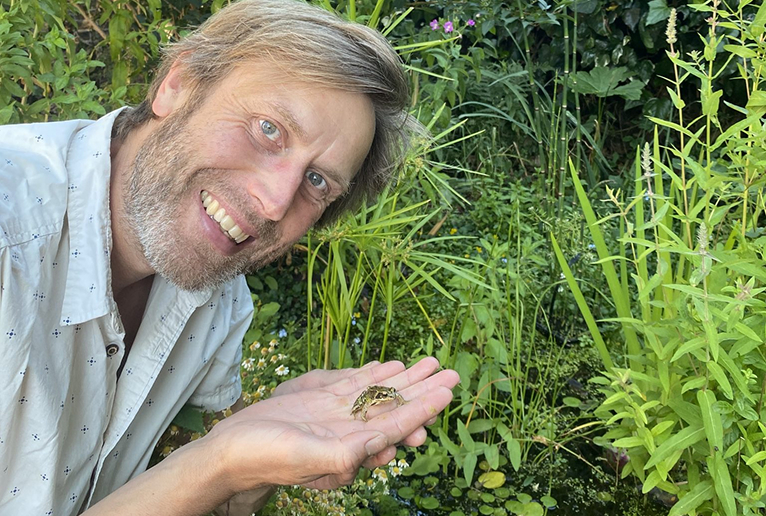
Where not to find a frog (most of the time)
It’s a common misconception that frogs belong in ponds. I mean, full time, year-round, in or by the water. Several times a year I’ll get a message from someone saying they’ve found a ‘trapped’ or ‘lost’ frog in their garden. A heartening chorus of concerned neighbours will then suggest locations of ponds in the area the hapless amphibian can be transported to. Why hapless? Because froggy was almost certainly right where she wanted and needed to be.
They – and I’m talking UK native frogs here – actually spend just a fraction of their adult lives at the pond. They grow up there, undergoing that most magical of transformations as they metamorphose from frog spawn via tadpoles into froglets. Then they leave the pond.
If it’s super hot and dry outside they’ll return for some much needed hydration. Some see out the icy months underwater too, in a state of sort-of suspended animation, absorbing oxygen through their skin. And, of course, they return to ponds to spawn, males heralding the occasion with loud croaking (females sometimes croaking too to tell a male to sod off and leave them alone till their ready).
So, if they’re not in the water then where are they, and why does this matter?
Where to find a frog (if you're lucky)
Before answering that question, let’s step back a minute and ask ourselves what frogs need. Like all of us animals, they need to find food, they need to drink (or absorb water some other way), they need to breed and they need to be able to find cover from predators or harsh weather.
Can’t ponds provide for all of those needs? They’re certainly reliable sources of water, aren’t they? Well, actually, they might not be. In nature, ponds have a habit of filling up with leaves and sticks and dead animals and wotnot, and before long… they’re bogs. Bogs can be fairly frog-friendly but the same thing happens to them – more leaves, sticks, dead animals, and before long the bog is a damp meadow. Then trees. Soon, no pond.
Some ponds last years. Others may only last a few months, either drying out permanently or perhaps filling and drying with the seasons, earning themselves the lovely term ‘ephemeral ponds’ in the process.
The point is, if our young frogs can’t leave the pond and roam about on dry land then they’re at risk of drying out with it. Curtains for Kermit.
On the other hand, being able to roam around outside your home pond opens up enormous possibilities for fine dining on slugs and ants and caterpillars and all sorts of other yummies that might not be in nearly such abundant supply in or by the water. Where to find such things? Rotting wood like tree stumps. Fallen branches and log piles. Compost heaps. Long grass. That damp corner behind the shed. All these places and more provide food and also make good hideouts. They’re also generally nice and moist too.
One other thing that’s really important is genetic diversity. Isolated populations of frogs, or any other animal for that matter, risk succumbing to in-breeding – having babies with their close relatives. This can make them vulnerable to disease and mutations so is best avoided. How does one do that if one is a frog? One travels to different ponds to meet different frogs at spawning time. And what does one need to be able to do to achieve that? Eat, drink and find safe cover whilst travelling over land to get there.
So, frogs need ponds, but they also need frog-friendly habitat outside their ponds, and between ponds, so they can move around and eat and grow and prosper. They need this habitat – log piles, compost heaps, long grass patches and the like – to be close enough together that they form safe pathways and stepping stones. In other words, they need connected networks of habitat.
Built-up areas tend not to be that well stocked with wildlife habitat though, and what’s there is often fragmented by walls and fences. It can be tricky too to know what the best thing you can provide for frogs is, if you don’t know what your neighbouring gardens, terraces and greens paces are or aren’t already providing. Tricky, unless you’re connected into a social network of nature-nurturers making, mapping and sharing habitat info in a collaborate effort to support Kermit and friends. Then, it’s easy peasy. Just leap on the Natural Neighbours app 🙂